
Brands


Products


Client Care


🍁 Proudly Canadian since 2005Clean, age-positive skincareEvery brand hand-picked by us
I sell skincare and I won't touch tretinoin. Here's why


I Sell Skincare and I Won't Touch Tretinoin. Here's Why:
You've probably seen the tretinoin glow-ups all over social media. And honestly? They can be pretty convincing. But there's a side of the story that doesn't make it into those before-and-after posts..
What Exactly Is Tretinoin?
Tretinoin (you might know it as Retin-A) is a prescription-strength vitamin A derivative. It's been around for decades, and dermatologists call it the "gold standard" for anti-aging and acne treatment. You can't get it over the counter and you need a prescription for it.
It works by speeding up your skin's cell turnover. Normally that cycle takes about 28 days. Tretinoin hits fast-forward. And yes, that can mean smoother skin, fewer fine lines, faded dark spots, and clearer pores.
Sounds amazing, right?
But, it gets complicated.
The Part Nobody's Showing You on Instagram
When people talk about tretinoin online, they usually skip past the rough stuff, or brush it off as "just a temporary phase." But the reality is that the first 4–8 weeks on tretinoin can be rough:
- Redness and burning
- Peeling and flaking
- Dryness that no moisturizer seems to fix
- A "purging" phase where your skin actually gets worse before it gets better
- Sensitivity to basically everything - sun, wind, your other skincare products
A lot of people push through this because they've been told the payoff is worth it. And for some, it can be. But here's what most people don't realize: the damage doesn't always stop after the adjustment period.
What Tretinoin Actually Does to Your Skin Barrier (Long-Term)
This is the part that really needs more attention.
Your skin barrier is your skin's protective shield. It keeps moisture in and irritants out. It's what stands between your skin and the outside world. And prescription-strength retinoids like tretinoin can seriously compromise it - not just temporarily, but in ways that linger.
1. Chronic Barrier Disruption
Long-term use of prescription retinoids has been shown to significantly disrupt the skin barrier's function. And this isn't a "give it a few weeks" situation - studies have found that barrier abnormalities can still be detected months after you've stopped using it.
2. Your Skin Can't Hold Onto Moisture
Tretinoin increases something called transepidermal water loss (TEWL). In plain terms? Your skin literally loses its ability to stay hydrated on its own. That's why tretinoin users often feel like they can't moisturize enough - their barrier is too compromised to hold the moisture in.
3. It Messes With Your Skin's Structure
Your skin cells are held together by tiny protein "bridges" that keep everything locked in tight - like mortar between bricks. Tretinoin can weaken those bridges over time. The wall might still be standing, but it's thinner, more fragile, and way more reactive to things that never used to bother you.
4. It Strips Your Natural Sun Protection
Here's one that blew my mind: after one year of tretinoin use, studies have shown up to an 80% reduction in melanin content. Melanin is one of your skin's main natural defenses against UV damage. So while your skin might look brighter, you're actually removing its built-in sunscreen. Kind of defeats the purpose of "anti-aging," doesn't it?
5. Your Microbiome Takes a Hit
Your skin has its own ecosystem of beneficial bacteria (your microbiome) that helps keep it healthy, balanced, and resilient. Constant irritation from prescription retinoids disrupts that balance and microbiome imbalance is directly linked to inflammatory skin conditions like rosacea and eczema.
6. The Vicious Cycle
This is the part that really gets me...your skin will be good for a while after the initial purging stage, but then the damage from the harsh ingredients will start to show.
A damaged barrier lets in external irritants → which triggers chronic inflammation → which causes more barrier damage → which lets in more irritants. It's a loop. And then you end up buying a whole shelf of products just to fix the damage the tretinoin caused in the first place.
This is why I would never ever use a prescription retinol. Short term gain, but will cause long term issues.
7. And Then There's What's IN the Tube
Here's something else that doesn't get enough attention: tretinoin doesn't come on its own. It comes in a cream or gel base - and when you look at what's actually in that base, it's… not great.
We're talking synthetic preservatives, stabilizers, emulsifiers, and solvents that most of us wouldn't choose to put on our skin if we read the label first. Parabens, propylene glycol, butylated hydroxytoluene - ingredients that can irritate, disrupt your microbiome, and add to the barrier damage the tretinoin is already causing.
You don't get to choose a cleaner version. It's a prescription.
It's the same reason I won't use prescription estrogen creams on my face (other areas yes but I'm too picky about what I'll allow on my face) - the active ingredient might have benefits, but the delivery vehicle? Full of stuff I'd never put on my skin. You're solving one problem while creating others.
When you're putting something on your face every single night, the base cream matters just as much as the active ingredient.
But I Still Want the Benefits of Retinol…
Of course you do! And you absolutely should have them. Vitamin A is genuinely one of the most powerful ingredients for skin health. The issue isn't retinol itself - it's how it's delivered.
This is exactly why I love the Marie Veronique Multi-Retinol Night Emulsion so much (literally one of my favourite products and one of our most popular). It was formulated by an actual scientist (Marie-Véronique Nadeau) who looked at all the problems with traditional retinol products and said, "We can do this better."
And they really did.
What Makes the Marie Veronique Multi-Retinol Different
Instead of blasting your skin with one high-potency ingredient and hoping for the best, this emulsion uses three different retinoid actives that work together:
- Encapsulated Retinol - The retinol is wrapped in a protective capsule that keeps it stable and delivers it gradually. Most retinol products degrade from oxygen and light before they even do their job. This one actually stays active.
- Bakuchiol - This is the secret weapon. It delivers retinol-like benefits through completely different biological pathways AND it stabilizes the retinol in the formula. More benefit, less irritation. Win-win.
- Retinyl Sunflowerseedate - A long-chain retinyl ester that hydrates, maintains moisture balance, and reduces irritation. It also supports skin cell renewal at the epidermal level.
This "load-sharing" approach means you're getting comprehensive anti-aging benefits without forcing your skin through the wringer.
And Here's What It Doesn't Do:
- ❌ No barrier-damaging preservatives
- ❌ No microbiome disruption
- ❌ No redness, peeling, or purging phase
- ❌ No fragrance or essential oils
- ❌ No prescription needed
It's also been ocular tested - meaning it's gentle enough to use around your eye area (Marie Veronique doesn't make an eye cream because they recommend this retinol as their eye cream). Try saying that about tretinoin.
Real People, Real Results
This product has a 4.7 out of 5 star rating with nearly 150 reviews, and the feedback from women in their 40s, 50s, 60s, and beyond is honestly incredible:
"I have been using this for about three years. I was using regular retinol and I had the usual red peeling dry skin. Once I switched to this my skin has been glowing. Fine lines almost gone. No hyperpigmentation." — Lorraine, 65+
"I have used several retinol products but none of them has had the results of this product. I have had regular problems with breakouts and this crème has managed to get me an even and absolute luminous skin." — Jitka, 45–54
One reviewer - a 65-year-old woman who spent 45 years in the cosmetic and skincare industry - said that after just one week, she sat down to do her makeup and forgot to put on her foundation because her skin looked so good. That had never happened to her before.
The Bottom Line
I'm not here to tell you that tretinoin doesn't work. It does work for some people, in some situations. But I would definitely never use it personally.
For most of us who are looking for real, lasting skin health without the drama, there's a smarter way.
The Marie Veronique Multi-Retinol Night Emulsion gives you the anti-aging, pore-clearing, skin-smoothing benefits of vitamin A without sacrificing your barrier, your microbiome, or your sanity during a months-long "adjustment period."
If you have any questions about it - you know I'm always happy to chat.

Also in Blog
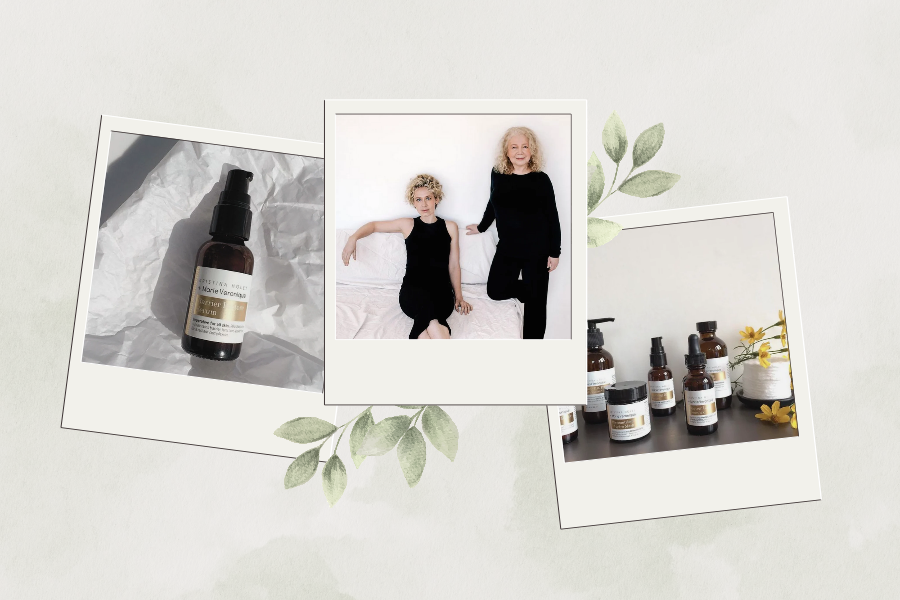

Marie Veronique, the chemist who is early to everything
Marie Veronique was making oil cleansers and barrier serums years before anyone else caught on. Here's the chemist behind the brand, and what's coming in January...


Your skin isn't failing. It's changing
For most of my life, my skin was oily. Acne-prone, shiny-by-lunch, blotting-papers-in-every-purse oily. I spent my whole thirties trying to get it under control (with a couple of pregnancies thrown in to keep things interesting).


The beauty standard just stopped being human
I have a love-hate relationship with AI, and I don't think it’s going to change any time soon. The hate part is easy to explain. Scroll for two minutes and you'll find women who don't have a single pore or wrinkle - perfect skin, perfect ...
Aging Authentically · Part
This blog is part of
See every post and the survey results from this part, or start the whole campaign from the beginning.

Hi, I'm Lisa
I started Lilou in 2005, and I still pick every single product we carry. Not sure what your skin needs? Tell me about it and I'll point you to what's worth buying (and what you can skip).